

By Olivia Smith
Road Funding and Tax Proposals Move Into Spotlight
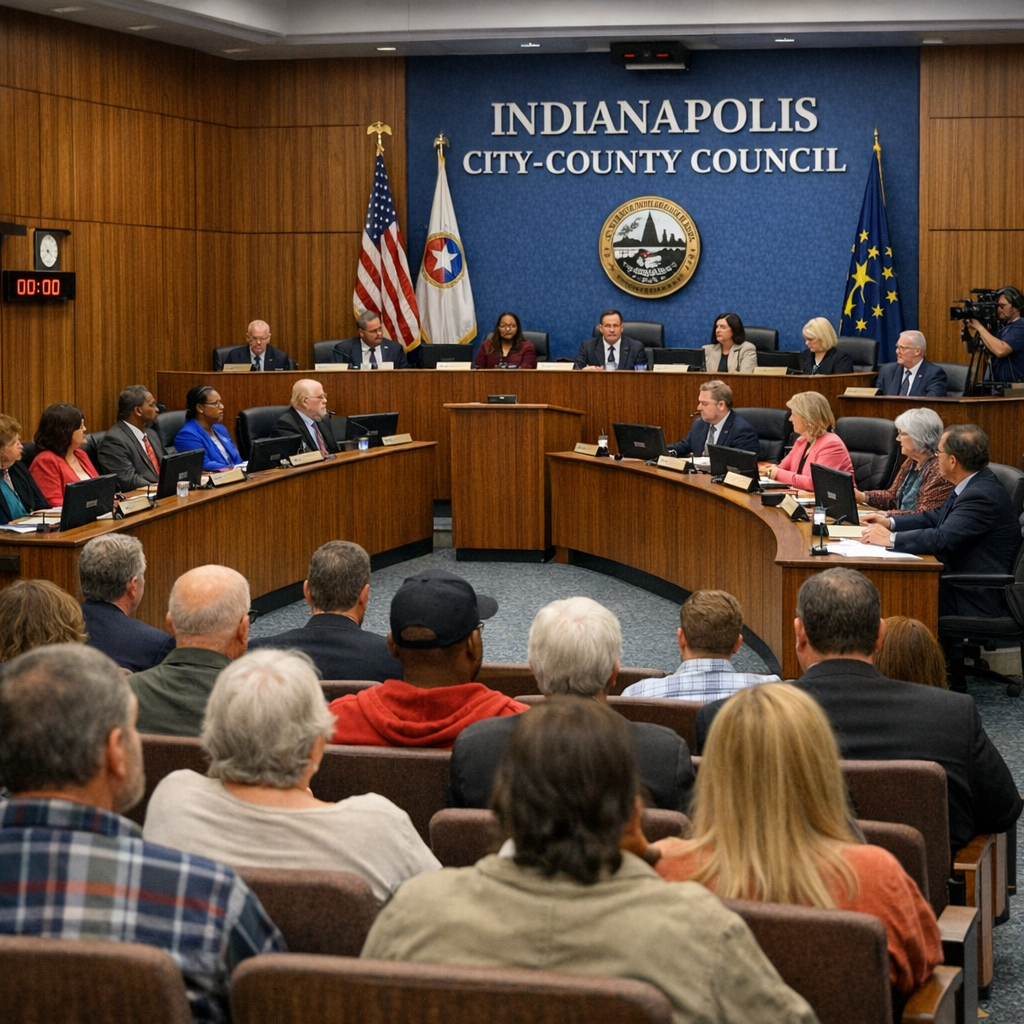
The Indianapolis City-County Council has set its sights on long-term solutions for infrastructure, especially road maintenance. One proposal under review would raise the vehicle wheel tax and passenger surtax, from current rates frozen since 1992, to generate enough revenue to meet escalating state matching requirements. Under this plan, funds would go toward both thoroughfare upkeep and residential street repairs — needed given months of resident complaints about potholes and degradation. Council members stress the plan is essential to avoid losing state dollars tied to matching grants. Mayor Hogsett has opposed tax hikes, setting up potential conflict over compensating for infrastructure needs while balancing city finances.
A Moratorium on New Data Centers Clears the Way for Regulation
Data centers have become a flashpoint in development debates. After nearly a year of community concern — citing environmental, noise, and resource use issues — the City-County Council and Metropolitan Development Commission unanimously approved a moratorium on any new data center development through at least the end of 2027. The pause aims to give officials, residents, and stakeholders time to craft clearer zoning definitions and rules that safeguard neighborhoods. Legislation will address issues like height limits, noise control, water usage, and environmental fairness.
Safety, Ethics, and Neighborhood Priorities
A recently advanced $19.49 million supplemental budget package reflects shifting priorities for Indianapolis. Almost half is dedicated to infrastructure—particularly street resurfacing—but it also funds housing stability, public safety, and quality-of-life programs. Simultaneously, there have been heated discussions around the Office of Public Health & Safety after an audit revealed issues with contract management and oversight. Some councilors pushed for a funding freeze if reforms aren’t adopted, but others raised concerns about how such a freeze could affect vulnerable populations relying on programs overseen by the office.
Why These Changes Matter
These combined policy shifts signal a city in transition: balancing rapid growth and development with transparency, environmental responsibility, and infrastructure resilience. For Indianapolis residents, decisions made now will influence how the city handles urban equity, community impact, and municipal trust for years to come.